Caterham Suspension Kits
Nitron and Penske coilover kits for the Caterham Seven — S3, SV and CSR. Every kit is specified for your car rather than sold off a shelf, built on valving proven in real competition. Choose by where your car sits, not by price alone — and ask us if you're unsure.
How to Choose
For the overwhelming majority of fast road and track day Caterhams, a correctly specified Nitron NTR R1 is the right answer — and a better use of budget than something more adjustable used without a process. The NTR R3 adds independent compression and rebound for drivers developing the car with intent.
The Penske kits are for the committed programme that values Penske's build quality, rebuildability and long-term development: the 7500 COSA and CODA, and the three-way, remote-canister 8700 at the top of the range. We will always recommend the kit your car and your use actually justify — read Nitron R1 vs R3 and our view on Penske Racing Shocks, then talk to us.
Which kit suits you depends less on the badge on your car than on how you use it. A fast road Seven, a car built around track days, one aimed at the Nordschleife and a sprint or hillclimb car each want something different from the same hardware. If you want to understand what the adjusters actually do before spending anything, damper adjustment explained covers it, and our wider Caterham build, conversion and setup work sits alongside this.
The Range
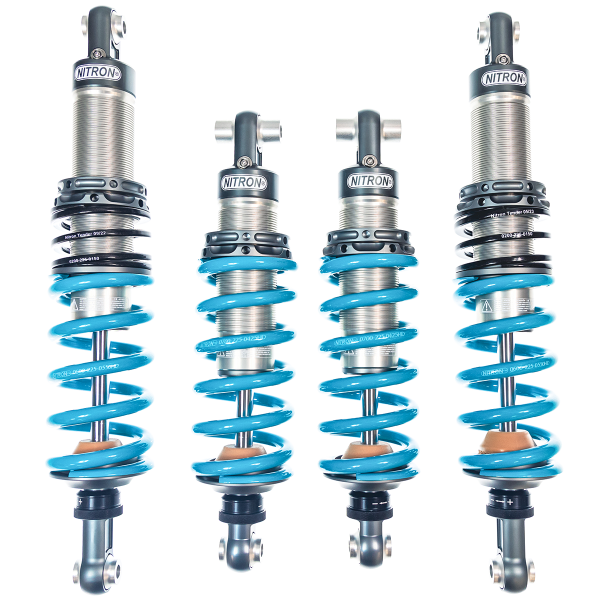
NTR R1 40mm
Single-adjustable. The right answer for the overwhelming majority of road and track day Caterhams.
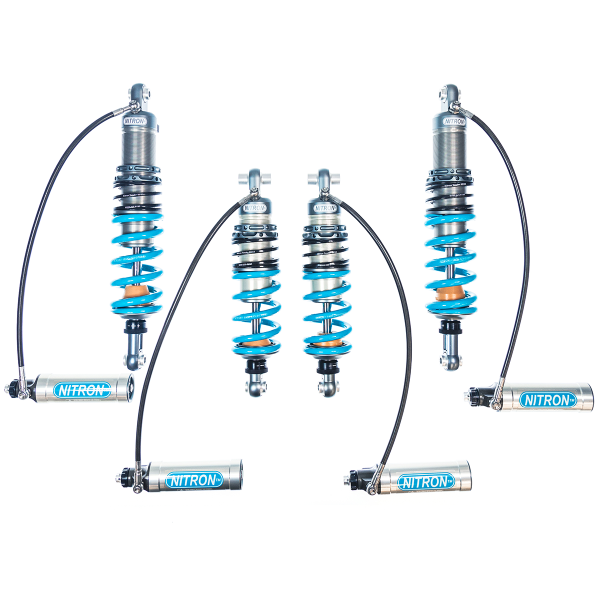
NTR R3 40mm
Independent compression and rebound — for the data-led programme adjusting with intent.
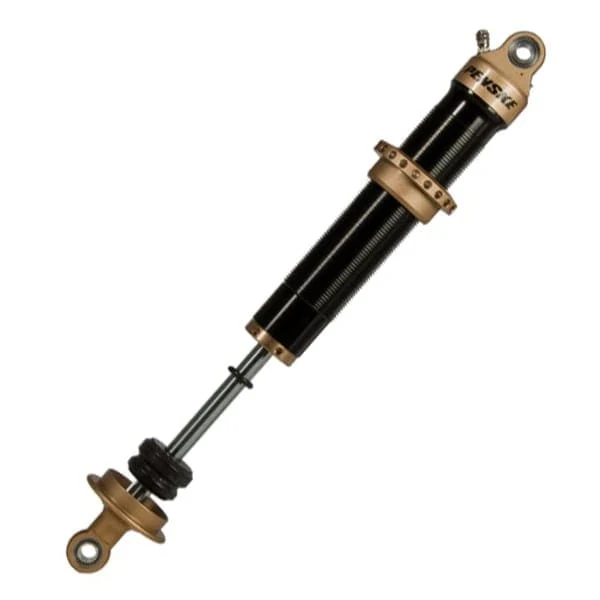
7500 COSA
Single-adjustable Penske. The entry to genuine Penske ownership, sweep or clicker adjuster.
7500 CODA
Double-adjustable Penske — independent compression and rebound, no remote reservoir.
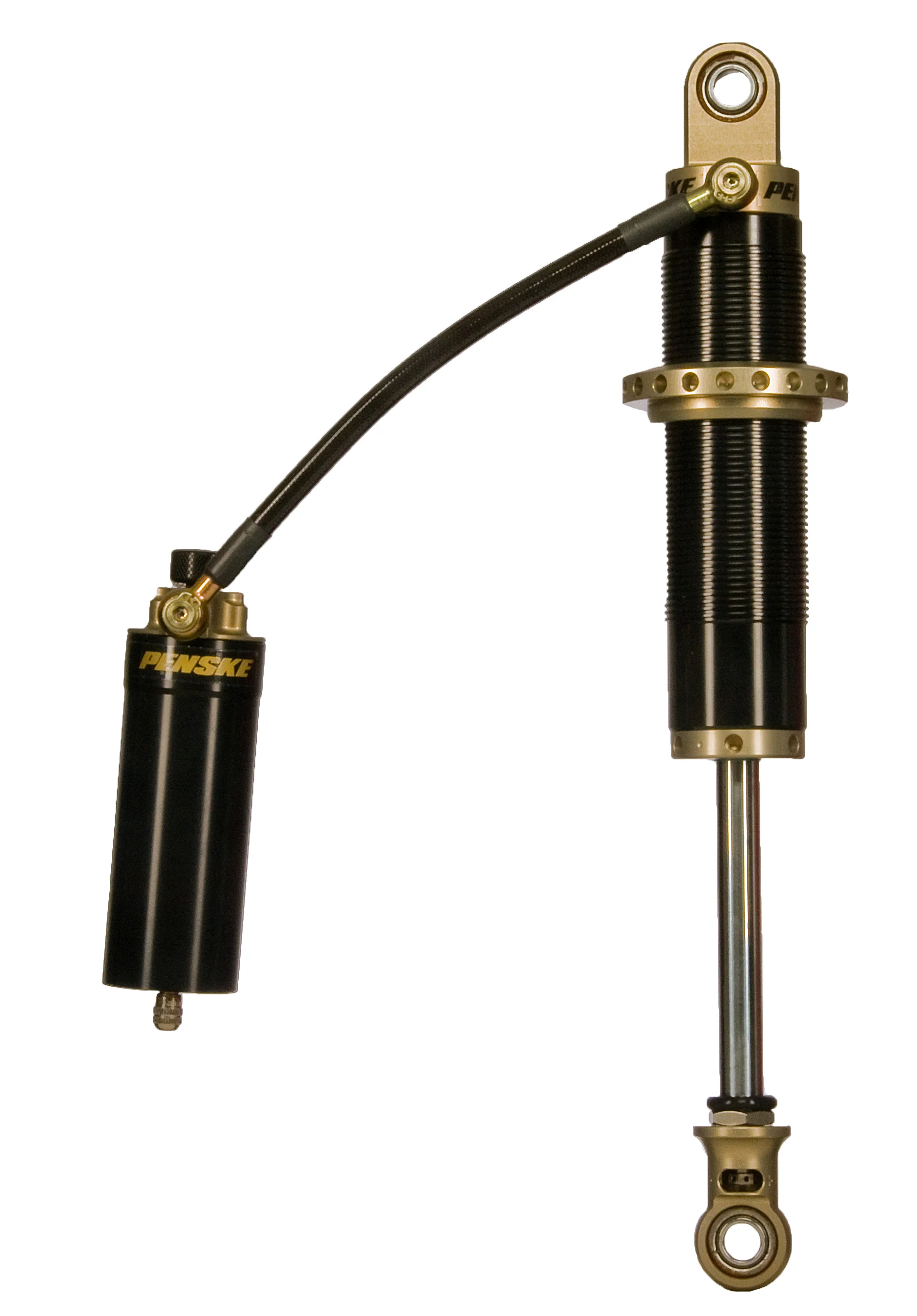
8700 3-Way
Triple-adjustable with remote canister — the top of the range, for the serious race programme.
All prices are "from", excluding VAT and shipping. Every kit comes with mounting spacers and is specified for the Caterham Seven — S3, SV and CSR chassis, covering Academy, Roadsport and Tracksport cars, the 270, 310, 340, 360, 420 and 620 in S or R specification, and Superlight R300 and R400. Sigma or Duratec, live axle or de Dion: the hardware is common, the specification is not. Eibach or Hyperco springs, hydraulic spring perches and Torrington bearings are available as options.
Still Weighing It Up?
The Caterham suspension buyer's guide works through the decision properly: what you are actually paying for, why a correctly specified single-adjustable kit out-drives a generically set-up double, what a digressive piston does, why every kit runs linear springs, and what each spring and ride-height option costs. The same advice we give on the phone, written down.
Caterham Seven Setup Guide
Once the kit is on the car, the setup is what makes it work. This is Simon's own method, written down: sump clearance first, then ride height at the spring platform, rake established through the Point A and Point B chassis measurements, and the corner weight approach he uses on a Seven instead of diagonal balancing — developed over 25+ years of sprinting and checked against scales.
It carries starting alignment figures and baseline damper click settings for the Nitron and Penske kits above, plus a printable record sheet so every change is written down. The figures are a considered starting point rather than a final answer — if the car is not doing what you want it to do, talk it through with us.
Not Sure Which Kit?
Tell us about your Caterham, your tyres and how you use the car. We will recommend the right kit honestly — and specify it to suit your car, not just sell it to you.
Start Your Specification